

A mid-sized manufacturing firm based in Europe was facing operational challenges that hindered its growth and efficiency. Over time, the company had expanded its operations to include multiple departments — procurement, production, sales, and finance — each of which had developed its own systems, workflows, and methods for managing data.
However, this growth came at a cost. As operations became more complex, the company struggled with data fragmentation and inconsistent reporting across departments.
Decision-making became slower and less reliable because management lacked a unified view of company performance.
Each department generated its own reports with different assumptions and data formats. Consolidating information for executive reporting required hours of manual effort and often led to discrepancies in key metrics such as sales forecasts, cost reports, and production efficiency.
Employees spent a significant amount of time reconciling data between spreadsheets and systems. This manual process slowed down decision-making and introduced unnecessary complexity into routine tasks.
Because each department worked in isolation, collaboration was limited. Procurement teams were unaware of upcoming sales trends, production teams didn’t have real-time updates on raw material costs, and finance couldn’t easily align budgets with operational realities.
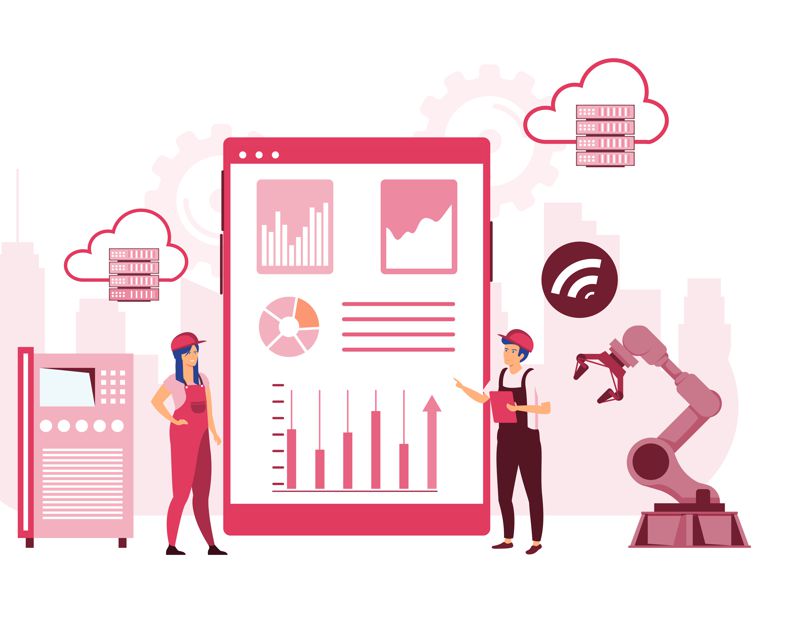
Infovibes implemented a centralized Business Intelligence (BI) platform designed to unify data from multiple departments into a single, reliable source of truth. The goal was not only to improve reporting accuracy but also to foster a culture of collaboration and data-driven decision-making across the organization.
Automated data integration significantly reduced the time spent compiling and verifying reports, freeing employees to focus on strategic activities rather than administrative tasks.

With shared dashboards and unified data, departments began collaborating more effectively. Procurement could align purchases with production needs, and sales teams could coordinate more closely with finance on revenue targets.

The BI system uncovered cost inefficiencies in procurement and production that had previously gone unnoticed due to fragmented reporting. By addressing these, the company achieved substantial cost savings.

Managers and executives gained access to up-to-date insights on sales performance, inventory levels, and financial health, enabling faster and more informed decision-making.

With accurate historical and real-time data, the leadership team could generate more reliable forecasts, improving both operational and financial planning.

By consolidating data from multiple departments into a unified Business Intelligence environment, the manufacturing firm was able to streamline operations, reduce costs, and create a foundation for sustainable growth. The project demonstrated the tangible benefits of breaking down data silos and embracing an integrated data strategy. What once took hours or even days to compile can now be accessed instantly through interactive dashboards. Employees across all departments now operate from a single version of truth, improving both accountability and collaboration.
PROJECTS
HAPPY CLIENTS
YEARS
TECHNOLOGIES
Unit 7 Navigation Business, Ashton-On-Ribble, Preston, PR2 2YP.
8 The Green, STE B, Dover, DE 19901, KENT COUNTY, Delaware.